Blog Archive

Tuesday, 21 June 2016

England are secretly good - how do they become great?

English fans have a tendency to make rash judgements on small things. I myself am no different - I was irritated to not see Deeney or Carroll go, and I thought Drinkwater would have been a good midfield option. However, despite the meandering performances we've seen, England are secretly one of the better sides at the Euros.

It's easy to look at the results - a draw against Russia and Slovakia aren't exactly exciting - but over three games anything can happen. Players miss chances, and some put in chances that they normally wouldn't (Gareth Bale), so it's easier to look at the chances, and the quality of said chances, in order to look at the level of performance.

Roy Hodgson has taken a lot of stick for being cautious - wrongly, in my view. England play a hyper-offensive possession system that sacrifices directness for control of the ball. The issue people have is that watching this possession system can be quite dull, and it's true; but like Spain, we use possession as a defensive tool as much as we do an offensive one.

This is why, over three games, England have conceded pretty much no good chances. Bale's goal came from a 35-yard free kick, Russia's from an immaculate header and Slovakia had one half chance when Chris Smalling made an error, that led to nothing.


Big thanks to Michael Caley, @MC_of_A, for the use of these charts.

If you're wondering what this picture means, squares equal shots and where they were taken. The bigger the square, the more likely the chance is to be converted according to the expected goals model. Essentially, what this picture shows, is that England have been truly dominant. From the chances England have created, you'd expect them to score around five times in the three games, which whilst not exactly rampant, is pretty solid. Especially when we haven't conceded any decent chances. 

Even against Slovakia, where the general consensus was that England were toothless and abject, that simply isn't true. England created a decent number of good chances, eight shots within 12 yards of the goal. For some reason, conversion drives narrative, when really it should be performance. England were good against Slovakia, especially for the first 60 minutes.


Whilst there are a decent number of low xG efforts coming late on (potentially due to a lack of secondary option), the cluster of shots we've had from close range should and on another day would lead to goals.

So we can see from this that England are actually good, and play a similar style to Spain if without the mesmerising ability of Andres Iniesta. The style involves keeping the ball in order to try and create high quality chances and to stop the other team from having any meaningful possession. So how do England become as good as Spain?

There are legitimate concerns over England, but the media and public narrative appears to not address most of them. Jordan Henderson appeared to be the subject of much ire yesterday, despite creating some very good chances and combining with Clyne superbly down the right flank, whilst Rooney escaped criticism for his sterilisation of the England attack over all three games.
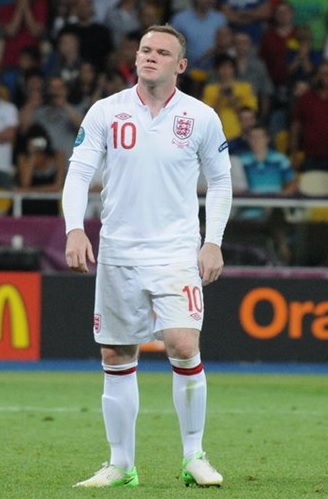


Wayne Rooney is as much a concern now as he was pre-tournament. He's now a midfielder, despite appearing to lack the composure to play deep under pressure. Just look at what happens when he gets pressed deep against Wales - he loses the ball, gives away a free kick and lo and behold, we are one goal behind. When he's not on the pitch, England are no worse a side and I think there's an argument that they are a better team without him. Most concerning of all was his need to spray long balls out to the flank, without ever offering any penetration. Rooney sterilised the England attack against Russia and Wales by playing these slow, long balls to feet and somehow got more praise for it than Henderson did for playing the ball in behind.

England were dominant and creative without Rooney on the pitch against Slovakia. All of the decent chances created came before Rooney was on the pitch (and also usually involved Lallana). I'm not a Jack Wilshere fan but he at least attempted to split defensive lines with his passing and combined well with the England interiors at times. 


I think England's best midfield might be Eric Dier, Jordan Henderson and Dele Alli. Eric Dier has been absolutely superb, and has somehow transformed into an elite level defensive midfielder in one season. Henderson offered penetration and balance to a disjointed midfield and Dele Alli is an incredible talent.

Alli's form is cause for concern, however. He hasn't performed to the level we've come to expect, but is still managing to do good attacking things. He set up Daniel Sturridge's winner against Wales with an audacious flick in a tight space. He hasn't been great despite that, though, but he is legitimately brilliant.
 If the system isn't getting the best out of Dele Alli, I'm not sure Alli is the problem. I think if he played with Henderson, he may perform better than with Wayne Rooney, but unfortunately we haven't been able to see that.

Another interesting name on that list is Raheem Sterling, who has also garnered a lot of bad press. In 2013/14 he was electrifying, a fast, smart attacker who beat defenders for fun and moved into space. However, since then, he hasn't played in anything like a similar system. I wanted Sterling in the side as with the amount of Spurs and Liverpool players in the team I thought we would play a heavy-pressing attacking side, in which Sterling flourished at Liverpool. Instead, we're playing a possession based game with Rooney who can't press, which is working, so there is no reason to play Sterling. Writing him off as 'rubbish' is a bit silly though, as two seasons ago he was the hottest talent in the world, and still has time to come good.

England have probably the best set of strikers at the Euros, and they are somehow managing not to use them well. Harry Kane is a fantastic striker, a player who scores once every 180 minutes, presses efficiently from the front and can drop deep to link play. Jamie Vardy is a completely different but equally dangerous threat. We all know what he can do, but we're not seeing enough of it from either player. Sturridge has been playing wide and has been decent enough, but still isn't doing what we need from him.

I've criticised and doubted a lot of players here, and yet they are still doing well. We've qualified, created chances and found a decent enough attacking unit and a good system to stop chances being created against them. There are concerns once England play a team who press and attack them, but that might suit the pace we have on the counter. In conclusion, I'm cautiously optimistic about England and think with the right team selection, there's no reason England can't keep going in this tournament.

Monday, 16 November 2015

A Vision for England

England succumbed to a 2-0 loss in what, surprisingly, was a fairly encouraging performance against a new look Spain side. Spain dominated the ball and looked the better side - but we expected nothing less. What was encouraging was how we set up to play and win the game; yes, it didn't come off, but the game was changed by a wonder strike from the one player who English fans may not have been worried about, Mario Gaspar.

Roy Hodgson has his critics, and I'll admit I wasn't overjoyed by his appointment, but he does seem to recognise that England have to play without the ball for large portions of the game. Since Barcelona and Spain's assault on world football through their heavy possession system, there has been a shift towards counter attacking and transitional play, headed by Bayern Munich and Borussia Dortmund, both of whom became European giants.

This shift has meant that teams like Crystal Palace and West Ham have been able to upset the odds a bit, by sitting in, keeping their shape and exploiting the space left as teams try to break down the stubborn defence. Dominant, powerful defenders tend to flourish under this system, but sometimes these defenders need to be calm under pressure, especially with the ball.


England have to adopt this style in order to have any chance of doing anything, it seems. They have plenty of pace to hit teams on the counter, fit, energetic midfielders and two of the best young defenders in Europe, in Smalling and Stones. Defensively, England can certainly adopt this style, though there are question marks over the holding midfield position. My personal choice would be Jack Cork, but Eric Dier has proven himself a very good player in that role and his physical size would be handy with Stones' slightly less imposing figure. Smalling has blossomed into a commanding and strong defender who can organise people. Two years ago, it would seem absurd to say Smalling could captain England, but now I think he'd make a good choice, in a few years.

In Clyne and Bertrand, England have full backs who can defend - which is often regarded as a rarity in the modern game - who have bags of pace to join the attack should they get a chance. Clyne has proven himself very good going forward and capable of scoring and creating with semi-regularity. Luke Shaw will hopefully come back from his injury and re-find his form, which would give the England manager some headaches over that position. Shaw offers a wonderful attacking outlet from deep but I think Bertrand is more solid defensively - both are very solid picks. 

Out wide, we have Raheem Sterling, a talented but frustrating player who is yet to make his mark in international football. Given space, however, he can be destructive, and this system would look to create space for him to roam into. He's a very intelligent player as well, so should be able to take good positions to transition from defence to attack very quickly. Intelligence is such an important attribute for an attacking midfielder/wide forward and Sterling should suit this style for that reason.

The right hand side is tricky. Walcott has electric pace, but cannot be a mainstay in the side due to his injury record, whilst Oxlade-Chamberlain's inconsistencies and lack of game time mean he isn't a reliable choice. Chamberlain would make a great choice on the right side too, as he is fervent in defence and carries the ball at frightening speed. England have a few options to play on that side - Sturridge could work cutting in on his left foot, which would also mean that Harry Kane could play, but if you have an inverted wide forward on the left, you usually want more of a traditional winger on the other side to keep the width and stretch the pitch; think Bolasie - Zaha or Lanzini - Moses.However, Sturridge moving in from the right would suit Kane's style, as he could drop deeper and leave that space for Sturridge to move in to. Kane loves to play as a hybrid 9 and 10, a 9 and a half if you will, so he can come deep and allow Sturridge to make runs into the right half-space beyond him.

Should Walcott be injured for Euro 2016, or looking forward, the World Cup in 2018, England could do worse than look at Nathan Redmond, a skilful winger with a great right foot who looks to be maturing into a very decent player, if they opt to go for a right footer on that side. Redmond could turn out to be a lethal player as he shows flashes of great finishing and powerful shooting. Jesse Lingard has just received a call up, and he can play on either flank and could be a handy player to have around the squad because of it. He can fill in for Sterling and is probably a more natural goalscorer from the left, or he can play down the right and offer some width and a threat from the other side.

Central midfield is often a problem area for England. It used to be we had too many good central midfielders, but now it's finding that balance. Ross Barkley has bags of ability and will likely be the best choice to play as the playmaker, but one should not rule out Adam Lallana, who could shine in a counter attacking system. Lallana is often used as a secondary playmaker, shunted out wide or alongside another attacking midfielder, but his deft touch and quick turns could be utilised to turn defence into attack with immediacy. Collecting a pass from a defender on the half turn is something that few England players have been able to do since Paul Scholes, but Lallana has the ability to quickly transition and this can be extremely effective when teams come to attack.

Barkley can do it too, and I think he'll be the player who gets the chance, but I've always liked Lallana as a player and think he needs to find a role that suits his skillset. Barkley has the added bonus of physicality - he's quick, strong and fitter than Lallana and given that responsibility he could definitely be one of the shining players at the Euros and World Cup.

Alongside him, Henderson seems the obvious choice, as he is able to be disciplined and sit in but also has an eye for a pass and can harry opposition attackers all day. When you don't have the ball for the majority of the game, you have to be fit and able to press in the 88th minute as well as the 8th. Henderson will give you that, which makes him the obvious choice. Ryan Mason is a similar player who could act as a good back-up, and Shelvey would be a better player if we are looking to dominate, due to his passing range and ability to control the tempo.

Up top is an interesting dilemma. I would personally plump for Harry Kane, due to his defensive benefits as well as his ability to link the play. Under pressure, he need to be able to play it direct to him sometimes, and he can bring the ball down and find a team mate. He's not slow either, and can certainly run in behind some of the less athletic defences. He won't be beating Varane for pace, but he isn't slow by any means. Sturridge offers a more direct option, and on the counter his pace and skill would be priceless, but his link up play can be a bit lacking at times and with his injury record there is no guarantee that he will be fit to play at any point.

Wayne Rooney is an issue at the moment, and it's plain for all to see. His touch isn't there, he looks slow, ponderous and a shadow of the player he was five years ago. For the good of the side, and the development of Harry Kane in this side, leaving Rooney out of the first team would be beneficial. Even if you keep him around for his presence and leadership, I would not start him unless he suddenly halts this decline that, statistically, has been happening for quite a few years now.

That's my vision for England in the next 2-3 years. We have some very good young talent and we should look to blood as many of them as possible. Players like Alli and Shelvey should get chances to impress and though I wouldn't start them in 2016/18 on what I've seen so far, there's a chance that they could become regulars. James Ward-Prowse will likely be in the squad by 2018, and some of the talent in the Championship too might be good enough - the highly-rated Demarai Gray, Lewis Cook or Will Hughes could be close to the team by then.

We have to invest in the youth and try and create a team, rather than always picking the best players. Use Germany as a model, who created a team from young players and stuck with them - and they came out alright.

Thursday, 9 April 2015

Greg Dyke's Misplaced Faith.

Greg Dyke has suggested stricter laws on home grown players, to try and bring more English players through. As it stands, around a third of players in the Premier League are from the country of the league, which is the lowest percentage in the top 5 European leagues. The FA clearly believe that this is why we are perceived to be doing badly at international level, which on the surface makes sense. However, dig a little deeper and there are numerous problems.

1. We are not underachieving.

Why do us English football fans always think we should be winning competitions, or even making semi finals? Compared to Brazil, France, Germany, the Netherlands and nearly every top nation in football are much bigger, and importantly have more top coaches than we do. Germany are the prime example of a top football nation and have a population that far, far eclipses ours so will inevitably produce more top players - that being said, there are plenty of smaller nations who produce plenty of quality footballers. Belgium have a squad of players that was the third most expensive at the World Cup, and yet they are no bigger than England. A large part of this is down to a coaching problem. It costs around £5000 to do your coaching badges in England, but about a tenth of that in continental Europe. Belgium also had a practical plan to coach youngsters, rather than just 'more players playing'.

2. Correlation does not equal causation.

Yes, it is true that many top countries have more of their own players playing in the top leagues, so there is a link between the quality of the national team and the amount of their players in their league. However, that does not mean that the amount of players in the league makes the national team better - in fact, it means quite the opposite. Because our players aren't very good, we don't have a majority of players in the top league. If the England national team isn't great, then why would one of the top leagues feature a majority of English players?

The idea that playing more English players would improve them is so far wrong. The more foreign coaches and players we have in England the more they will learn new techniques, new methods and new tactical ideas. Also, playing average English players every week won't turn them into World Cup winners - otherwise Burnley would be top of the league. We don't need more English players; quality beats quantity.

So what is the solution?

It's hard to find a solution to a problem which is dubious, but if we really do want to become a better nation, restricting the foreign input is not the way to do it - in fact, we need more foreign coaches. We also need to lower the prices of coaching courses to get more coaches, increasing the quality of the training that our young players receive and hopefully the quality of the national team. We should also set out a plan for coaching similar to how Belgium did - pick a style, an identity, and stick to it. Whether it's creating counter attacking players in the mould of Germany, or technical players like Spain, or defensive minded players like Italy, we need a style and a plan.

I'm not suggesting that these changes will make us World Cup winners, or even make a significant difference, but it's more likely to than reducing the quality of our top league by playing more average English players.

Friday, 27 February 2015

The Importance of Full-Backs

I had the pleasure of watching the dampest of squibs at the Stadium of Light last week, as Pulis' anti-football earned them a 0-0 draw. As soon as the teams were announced it looked as if it would be a dull game, for a few reasons, but one stood out to me.

None of the full-backs were playing in the right place.

Anthony Reveillere was playing on the left, which forced him to come inside onto his favoured right foot, clogging up the midfield. Santiago Vergini's lack of attacking attributes were exposed at right-back. Chris Brunt played at left-back for West Brom, which was the most attacking choice, but Craig Dawson played right back for the Baggies.

The lack of chances and subsequently goals had a lot to do with this, as both teams clogged the middle and never had enough players going forward to really do anything, proving just how important full-backs are to the modern game, offensively. Defensively, they are important, as Dawson provided valuable cover of the defence which helped West Brom's defensive solidity which maybe an out-and-out full back might not have done.

In the last 10-15 years the role has evolved from one of the least to one of the most important roles in football. Your choice of fullback has a large effect on how you play the game and often are an embodiment of the style of the team. Barcelona have attacking, technically gifted full-backs which allow them to control games and create overloads, whereas Chelsea have Ivanovic, who is physical and primarily defensive, but often scores scrappy, important goals. Chelsea's defensive full-backs means they tend to and are set-up to be solid at the back first, whereas Barca attack first and foremost.

It seems counter-intuitive to suggest that if you want to become a better attacking team you should start with your defence, but attack minded full-backs can turn an good team into a great one. Leighton Baines for years has provided goals and assists from left-back which have allowed the side to be more compact and defensive in midfield. In fact, without Baines and Coleman last year, it could be argued that Everton would be near where they are this season.

All that being said, there are cases when full-backs don't seem to matter that much. Germany's World Cup winning side played, essentially, with four central defenders. As you would expect they were generally very defensively solid, bar the odd game, but they managed to decimate Brazil in the semi-finals. By playing four central defenders, they could invite pressure and counter attack at pace - however, they rarely needed to, but this was more down to Brazil's capitulation. One of Germany's most important players, Philipp Lahm, is a right-back who did spend some time there, but mostly played in the centre of the park.

If full-backs are so important, then why are they generally so cheap? The importance of them as not only a defensive player but as an important attacking outlet has only recently been truly realised (at least in England) and teams have started to recognise the inefficiencies in the market. However, this summer saw Luke Shaw move to Manchester United for a reported £30 million, which shows that top clubs are starting to realise the importance that some have seen for a while.

Southampton's rise up the table has been noticed by many, and so have Nathaniel Clyne's performances at right-back. Clyne is a fantastic player and his defensive and importantly attacking qualities have helped Southampton to become a feared team. Having him as an option coming forward makes Southampton capable of dismantling different defensive structures. A good attacking full-back can make a team more flexible and therefore harder to counter, and that is exactly what Clyne but also importantly Ryan Bertrand has done this season.

West Ham's transformation has been largely down to the attacking talent brought in, but the acquisition of Cresswell has turned out to be one of the best buys of the season. His crossing ability and willingness to attack have helped West Ham to stretch teams and he has also directly contributed to quite a few goals this season. Those few goals can add up to a large amount of points.

Strikers and attacking midfielders will always be the most expensive players and the most revered, but it won't be long before full-backs will consistently be going for 8-figure transfer fees and they will be more recognised as one of the most important pieces of a football team, rather than as Sunderland seem to treat them - an after thought.

Written by Elliott Griffiths (@ElliottBCFC)

Monday, 16 February 2015

50 Shades of Dimmy Gray

  • Full Name: Demarai 'Dimmy' Gray
  • Club: Birmingham City
  • Position: Left Winger, Number 10
  • Birthday: 28 June 1996
  • Born: Birmingham, England
  • Nationality: English
  • Height: 178cm (5'10)
  • Preferred Foot: Right
  • Type of Player: Inside Forward, Direct Winger
  • Key Attributes: Pace, Ball Control, Acceleration
  • He's like a young: Eden Hazard
 
 Breaking Into The Team:

Lee Clark's tenure at Birmingham City was, for want of a better word, a mess. Loads of players brought in, bombed out, thrown in at the deep end and yanked straight back out again. However, Clark must be praised with bringing some young players through, and Gray is one of those. At just 17 he was brought into the first team, but he struggled to make an impact, struggling with the physicality of the game. There were clear flashes of talent, but his lack of physicality made them infuriatingly infrequent.

Fast forward a year from his first inclusion, and it's a very different picture. Having started a lot more games and given a clear role, Gray has at times looked like a world-beater. Though his goal return is fairly modest (5 in 32 senior appearances) this is not all there is to the young winger's game. When Gray is at the top of his game he is frighteningly good with the ball at his feet, drifting past defenders as though were mere cardboard cut-outs.

Given space to roam on the left wing he can utilise his pace and tight ball control to manufacture chances for himself and others.

Strengths:

Obviously Gray's blistering pace is a huge part of what makes him dangerous. On the counter-attack he can be devastating, but his acceleration from standing make him equally difficult to deal with in a slower build-up. His hat-trick against Reading showed that he has the qualities to cause problems in many different ways. His first showed him cutting inside before placing a delightful strike just inside the post, then quickly following up by beating two defenders from standing and placing low into the net. He completed his hat-trick shortly after from a counter-attacking move.

His tight ball control and flair make him tricky to deal with and difficult to dispossess and means that many teams resort to doubling up on the winger - which shows the respect that Gray demands, even at just 18. With any young winger there are always questions when it comes to end product, but Gray has displayed his ability to finish - he just needs to work on his consistency. The reason he is so sought after is the potential he has. If he can find that consistency, he could reach the top. A player with his ability to run with the ball with end product is worth a fortune; Tottenham bought Lamela for £30m for that exact reason, and he isn't yet consistent.

Weaknesses:

As of yet, Gray still struggles physically. He is not weak, but he's not Wilfried Bony either, and of course he is still young and will grow to deal with the more physical defenders. I seem to remember a certain Cristiano Ronaldo was also quite lightweight at 18; not to suggest they are as good, but there are comparisons to be drawn.

As mentioned his consistency is not there just yet, but you wouldn't expect it to be. The one area I think he needs to improve is his creativity in the final third. He is very good at manipulating defenders and he can use the space he creates to bring other players in. Currently though, he is not being asked to do this and maybe he will be trained to be a very direct player rather than a wide creator a la Eden Hazard.

Conclusion and Scout Report:

The development of Gray depends vastly on the role he is required to fill. Currently it seems he will be deployed as a forward, attacking the box and being asked to score goals. The inherent risk here is that he becomes one-dimensional, always cutting inside and shooting. This can work if you are Arjen Robben or Cristiano Ronaldo and everyone knows what you're going to do, but are unable to stop it. Dimmy may be good, but he isn't world class and he may also need to become more versatile in the future, allowing him to influence from deeper positions. However, for now, Gray should be allowed to continue to play in his natural style, which is exciting and enjoyable to watch.

Gray would be a good signing for any lower half Premier League team, but Birmingham manager Rowett has warned Gray to wait for a top team to come in. Clearly, he is not the only one who believes Gray is destined for the top. Sporting Lisbon, famous for nurturing young talent and selling them to top teams, have reportedly been sniffing around the winger. With bids of £5m turned down in January from Championship high-fliers Bournemouth, Gray needs to plot his next move carefully. Currently it seems playing games is the best thing for him, and maybe his home club is the one to do that. At a reported fee of at the very least £7m, it's a big gamble for any team outside the top 6, who will be watching the youngster with intent. Unless something goes very wrong, you can expect to see the name Demarai Gray a lot more often in the near future.

Wednesday, 14 January 2015

Andrew Shinnie - The Scottish Iniesta

Andrew Shinnie, known as Shinniesta by the Birmingham fans, is making some waves in the Midlands. Originally he was brought in by Lee Clark, but severely misused, left out on the wing or forced to play up-front. Shinnie looked disinterested and much poorer than he really is.

Fast forward a year and a half, and the hiring of Gary Rowett, whose sense of style is only bettered by his tactical nous, has caused the rebirth of Shinniesta at Birmingham. Playing in his favoured role, the number 10 role, Shinnie has been able to display the artistry and skill that gained him the nickname.

Where most number 10's are becoming more physical-orientated, be it quick or strong or a combination of both, Shinnie is neither. In fact, it's his pace which is his main weakness. Fortunately, his intelligence, spatial awareness and skill allow him to overcome these issues. Shinnie is a style of player which seemed to fade away 10/15 years ago - rather than Iniesta, he plays more like Riquelme.

What has been really striking is his ability to make defenders look completely and utterly stupid. Whilst he is most dangerous facing the opponents goal, his innovation is matched by his ability to pull off some very clever turns that leave defenders helpless. For a perfect example, check out the second goal in Birmingham's most recent game:


(Skip to 0:58)


Shinnie's turn took two defenders out of the game, his shot hitting the post leaving an easy chance for front man Donaldson.

His movement and intelligence are a big part of how he plays, and it has to be. Slower players have to know how and where to move to find space, and Shinnie is very clever at finding pockets of space. He has no qualms about moving wide to find space if the middle becomes too congested, which leaves oceans of space for inside-forward Demarai Gray to exploit. His movement not only creates space for him, but the players around him.

Shinnie has a deadly strike on him too, capable of scoring from range if given the chance. His scoring record is far from impressive at Birmingham, as he has been misused and even now is more of a creator than a finisher, but at Inverness he had an extremely impressive record.

So far, I've made Shinnie sound like Zidane, so it must be noted he does have his flaws. He struggles with tight man marking sometimes, though this can also backfire if the wingers move infield. His vision is not always matched by his passing ability and occasionally his low percentage passes don't come off and attacks break down. Shinnie works hard but his defensive capabilities aren't that of an Oscar or Rooney, but he does a job defensively.

Overall, Shinniesta has become an important player for the new look Birmingham, a counter-attacking side in the mould of Dortmund, Shinnie being the Enganche which the front 3 revolve around. He is a player who is not known very well, but he could quite easily become a hipster cult hero. Not just for his style, but his beard.


The Shinniesta revolution is here and Scotland have their own Riquelme - Andrew Shinnie.


Wednesday, 7 January 2015

The Rowett Tactical Revolution

Us football fans are prone to hyperbole. Every young Argentinian is the 'new Messi', every 30 yarder is goal of the season and every retiring player is a legend. That's why when Birmingham fans refer to Gary Rowett as 'Bromsgrove Mourinho' it's taken as a joke.

But is there a bit more to it that that?

Whilst I'm not claiming that he's anywhere as good, stylistically there is more than a few similarities. When Rowett took the job, he said pretty early on that he wanted to cut the size of the squad - fair enough, I thought. Clark kept recruiting more and more players then not using them, so a smaller squad seemed a good choice. This allows Rowett to keep a settled side which he chooses to do with his starting eleven. Blues have kept the same starting team in the league as much as possible - something which Mourinho is famous for doing at Chelsea.

I know all that is a stretch but it's just part of the philosophy. Rowett seems to be implementing a style reminiscent of Dortmund and Chelsea's Premier League conquering side. It's the antithesis to Pep Guardiola's possession game. If you've ever read about Mourinho's ideas on football, you'll know that he states:

"The team who commits the fewest mistakes wins the game.

"Whoever has the ball has fear.

"Whoever has the ball is more likely to make a mistake"

Mourinho is one of the most successful coach in English football in recent times, so it makes sense to emulate him. The mistakes part of his philosophy was abundantly clear in last year's game against Liverpool - the most obvious example, but in general it doesn't mean big mistakes. Small mistakes. A defender putting the ball out for a throw-in instead of a simple pass, a midfielder overhitting a pass out to a full back. The team who makes more mistakes generally loses.

That is why counter-attacking can be so devastating. You pounce on a mistake. Blues pounced on 6 different mistakes at home to Reading. Rowett obviously uses the same or similar points for his own philosophy, as Blues don't ever attempt to control possession. We sit deep, keep our shape then if we win the ball, we attack with pace. Demarai Gray is key to this, as his pace helps to stretch teams and push them deeper so we can start to play our football. We pick on their mistakes whilst trying to reduce the amount we make.

Early on, we retreat deep and play long ball up to Clayton Donaldson, our Didier Drogba. Though Donaldson doesn't have the raw strength of a Drogba, he wins a surprising amount in the air - 44% of his aerial duels. It's more about pushing the opponent back, though. It forces them to drop deeper to deal with the long ball and the physicality of Donaldson, which gives Gleeson the space to find the passes to start our attacks later on. Donaldson's pace and work rate creates space for those around him too, as it makes the defence drop deeper to remove the space behind them.

Donaldson is a game-planning nightmare. If you drop deep to counter his pace, it allows the ball to be played into feet so he can hold it up and leaves more space for Andrew Shinnie. If you mark him tightly and compress the space, he can spin in behind using his pace. Speaking of Shinnie, his revival has been down to the space created for him. He's always been an intelligent footballer, but the speed of the game and lack of space made him useless. Now, under Rowett, he's being afforded space as the opposition drop deeper. When we're not playing quite so direct, Shinnie is instrumental in creating chances and finding space. Not only that, but he is involved defensively, closing down and shutting off passing lanes, which is quite rare for an attacking midfielder.

Unless you're Mourinho or Rowett.

The system Blues are implementing is similar to that of Chelsea's all conquering side. The Rowett Revolution is more than just new manager bounce - it's the implementation of a successful system where there was none before. 

Rowett is more than just lucky. He's creating an identity for a team who before were struggling with form, with style and with quality.

He is the Bromsgrove Mourinho.

Wednesday, 29 October 2014

Gary Rowett and Birmingham - An Upturn in Fortunes or A More Stylish Failure?

When Paul Caddis nodded in against Bolton in the 92nd minute to keep Birmingham up, there was a sense of relief, like all the problems had gone away. Talks of takeovers and new players were everywhere and there was a sense of optimism.


It was futile. The owners remained, there was no cause for optimism.


When Lee Clark brought in a lot of young, hungry players with pace and talent, there was a sense of optimism. A sense that maybe this season would be different, despite there being no change in management, or owners. Maybe Clark had learnt from his mistakes.


He hadn't. These players looked as lost and devoid of confidence as last season's.


Gary Rowett has taken over management duties at Birmingham City. Speaking with a gravity and poise that Clark could only dream of, Rowett spoke about his confidence in taking the Blues forward. What was most refreshing was his talk of tactics, how we would try and get the players playing. This was new to Blues fans - no more incoherent ramblings about bad luck and passion.


There's a sense of optimism around the club again.


Birmingham fans are among the most pessimistic in the country; who can blame them? A rich owner comes in promising money and success, before getting himself into jail. Even after winning the Carling Cup they got relegated. False hope is as common as a home loss at St. Andrews, but Rowett is bringing hope to the dishevelled fans.


Rowett has one thing in common with Lee Clark - he is passionate about the job. Hopefully that's all and all signs so far point to that being the case. Rowett talks in a composed manner, he has the players working harder than ever on their fitness (which has been a key issue this season) and his previous club's fans have bemoaned his departure.


This is what has Blues fans so excited. However, there is a case that even the best managers would have problems keeping Birmingham in the Championship. A squad containing almost exclusively players who either are young and promising or experienced in the league below is not often a recipe for success, but those who have watched Birmingham this season will know that they do have the quality to trouble teams - in fact, they have dropped 11 points from winning positions this season. Fitness issues appear to have contributed to this second half drop off - rather than a lack of quality.


Birmingham fans need to be careful with getting too excited but it's hard not to be impressed by Gary Rowett's optimism, passion and presentation of himself. The proof of the pudding will be in the eating, and with probably the toughest fixture of the season yet on Saturday, Rowett has his work cut out. Hopefully Birmingham can put in a decent performance and maybe even get something out of the game, but organisation and fight will be enough for the Blues fans after a shambolic performance on Saturday.


Can Rowett keep Blues up? If he does, he will get a lot of plaudits. It's a very difficult task, with Blues lying 23rd and teams above them finding form. Even if he doesn't, I think Blues fans would accept it as long as they saw some fight and evidence that things were changing away from the mess that was Clark's tenure at the club. A spell in League 1 would not be the end of the world, especially if we had a forward thinking manager at the helm and decent young players coming through. Good luck, Gary, never have I seen so many people desperate for you to do so well. Never have I seen a manager so well liked before even playing a game. Keep right on.

Wednesday, 22 October 2014

Barcelona - The 2008 Revival or a False Dawn?

Last night saw Barcelona ease past Ajax in a 3-1 victory, but is this the Barca of old or is this the team which has struggled when the going gets tough again? At half time it would seem as though Barca were back to the best, having cruised into a 2-0 lead through goals from Neymar and Messi. They missed a host of chances too - Iniesta saw his chip saved after a surging run and Pedro crashed a low drive of the post. The second goal was Barca at their best; Iniesta picked up the ball, turned and picked an exquisite pass to Messi whose control was immaculate and his shot squirmed past Cillessen for 2-0.


However, the second half resembled the Barca of last season. They were a little laboured in possession and their soft underbelly showed again as they let Ajax back in the game. A scrappy effort from young forward Anwar El Ghazi made it 2-1 with not long to go. Fortunately for the Catalan giants they sealed the win in injury time with a neat finish from substitute Sandro Ramirez.


You can make excuses for Barca - they took off Messi and Neymar with 25 minutes to go which would damage any team's forward potential, but they still have an exploitable defence from the looks of this game, yet they haven't conceded a goal in the league. It's a strange situation they find themselves in, as they are scoring for fun and not conceding against league teams, yet they are still not impervious in Europe, having lost to PSG and conceding to Ajax.


I don't think this team will ever get to the level of the ridiculous team that won everything under Pep Guardiola. The fear factor is gone. Teams now come to the Nou Camp and know they can score, whereas before they were happy to get a kick. So what's changed? Though the attack is arguably better, especially with Suarez, it's clear that Barca miss Puyol and Xavi. They need a leader, a warrior in the heart of the defence, and that's what Puyol was. He made every tackle, every header and also was a threat at set-pieces. He wasn't the most glamourous player but he was extremely important and he made them so watertight at the back, a quality which now you cannot level at Barca.


Xavi is a big miss too, or at least the Xavi of 5 years ago. Ivan Rakitic was seen by many, including me, as a fantastic signing and good value too, but he isn't Xavi. He has the natural ability, but not the intelligence and speed of thought to play the same role. That's not a criticism of Rakitic, but more a demonstration of just how good Xavi was that even a midfielder like Rakitic looks out of place in Catalonia. This means that they cannot control games in the same manner as they used to which makes them easier to counter and easier to defend against because they can't play at the same tempo.


Do Barcelona have enough to win the Champions League? Yes, they do. They may not be the best defensively but they will score goals against any side in the world. Credit must go to Enrique for getting the best out of Neymar and bringing Messi back up to the level that he might not have been at last season.


The real test is El Clásico. This is a game even more intriguing than usual for a myriad of reasons. Suarez will probably play at least some part in the game and it will be interesting to see how he fits in to this front line that has looked so dangerous already. Almost more importantly we shall see if Barca's defence can continue it's impressive record in the league against the almost inhuman scoring prowess of Cristiano Ronaldo, amongst others. We will also be able to see if Neymar can continue his form and become the player that many people hoped he would become.


Barca are still scary, they are still one of the best, but there are still issues which need to be ironed out and El Clásico is the biggest test of the season so far. What a game that promises to be.

Tuesday, 14 October 2014

Wayne Rooney - World-Class, or average?

Despite being Manchester United's third highest goalscorer of all-time and only being 7 international goals off the England record, there has always been doubts (and probably always will be) over whether Wayne Rooney is 'all that'. This may seem absurd, but it is a fair point given both his recent poor performances that have been masked by the odd goal, and the sheer brilliance he showed as a youngster. The fact remains, however, he has been prolific at club and international level, boasting a better than 1 in 2 record at Manchester United.

Let's start by discussing why Rooney may be considered world class. A superb record that displays his goalscoring prowess says a lot, but there's more to Rooney than that. He also boasts a superb assist record, hitting double figures for assists and goals in his last 5 seasons. He's a leader, one who at his best can grab games by the scruff of the neck and win them single-handedly. Not only is he a great scorer of goals, he's a scorer of great goals - think the overhead kick against Man City, the volley against Newcastle and even the free-kick against Arsenal at the age of 16. Even when Man United have struggled, like last year, Rooney's performances were a shining example. On-form, Rooney is a scary player to face, with pace, which is often very understated, power and impeccable technique. He may not be the exciting, raw 18 year old that he once was, but he's still a frightening player.

What I think is the problem with Rooney is that he was so good at such a young age, that because he's not Cristiano Ronaldo people think he's not very good. We play down his talents and feats because he hasn't progressed as much as we thought he might. You could argue that he peaked early - especially at international level, where he was absolutely scintillating at Euro 2004, but a damp squib at the recent World Cup. So what went wrong?

Rooney is plagued with inconsistency and cursed with being English. Inconsistency is understandable at a young age, so people didn't mention it so much, but at 28 those problems should have long gone. Quite why he cannot hit a consistent run for an extended period we may never know, but Rooney can be quiet for long periods of games or even seasons, but he will always score goals and make chances. That's what sets Rooney apart; against Estonia he was poor, the public opinion of him at an all-time low and a lot of pressure on his shoulders, yet he still scored the winner. Good players have bad games, great players have bad games, but great players will still contribute.

Being English and only playing in England may have hurt Rooney's career. Whilst he is a very physical player, he is extremely technically gifted, but maybe lacks the footballing intelligence to fully utilise his talent. In England, physicality is so important that we maybe don't look at the finer details. Had Rooney moved abroad, to Real or Barcelona at the age of 23/24, he may have become the player we all hoped he would. The European focus on intelligence, positioning and ball retention is extremely close and this would have helped Rooney massively. As it is, his awareness and movement have limited him a little bit, I feel.

Look at the successful English teams - all of them have players that have played large portions of their career abroad. Chelsea will walk this year's Premier League, as has been clear since the summer, and their team consists of 2 players who have played in England their whole life - Terry and Cahill. A spell abroad may have sanded off Rooney's rough edges and made him the complete forward.

Wayne Rooney is an enigma - on one hand, he is statistically brilliant, obviously talented and an icon, but on the other, he is inconsistent and when he should be at his peak, he appears to be dropping off, a worrying trend that he will no doubt stop now I've written this. Will he go down as a great? Maybe for Man United, but I'm not sure he will be remembered as fondly in the eyes of the England fans.

Tuesday, 7 October 2014

Does Jonjo Shelvey's Inclusion in the England Squad Indicate a Change in Philosophy?

Since I can remember, England managers have been derided for always picking players from the big teams, or having their favourites. Whilst it sounds petty and it sounds like sour grapes, it's mostly true. Chris Smalling has been in plenty of England squads on reputation alone, despite being an average defender and poor in possession, which is a cardinal sin in international football, while Curtis Davies is forced to watch England games from his living room sofa.

Roy Hodgson, however, despite the criticisms levelled at him, is starting to break the mould a little bit, though it may have taken a little bit too long. Nathaniel Clyne has been the best English right back for at least 2 years, yet the player he kept out of the Southampton team, Calum Chambers, moved to Arsenal and got a call-up. That's not to say that Chambers shouldn't be in the England set-up, just that Clyne should have been first choice for a while now. At least Hodgson has seen sense and finally called him up, which other managers may not have done.

Probably the clearest example of this philosophy starting to change is the inclusion of Jonjo Shelvey, an enigmatic but talented young midfielder. Shelvey has impressed at Swansea with his fantastic range of passing and eye for goal. The London-born midfielder should suit international football, as it is generally played at a slower pace and he excels in a possession based game. He is generally very composed but sometimes picks the wrong pass which can cause trouble, though this side of his game has improved since joining Swansea. What this may indicate is not only a change in selection policy but a change in playing style for England. Whereas before we aimed to sit back and break with pace, using Sterling and Sturridge's speed which is so often displayed at club level, maybe this indicates a shift to a possession based game.

Though Shelvey is often deployed in a deeper role, England still lack a proper holding midfielder. Attempts at playing Wilshere as a defensive midfielder will likely fail, though the national team appears to have an obsession with trying to play box-to-box midfielders in defensive positions, as Wilshere takes over Gerrard's mantle of not defending. There is a lack of top English holding midfielders at big clubs, so for some reason England just play without one, rather than look at other options at 'smaller' clubs. Every top team has a holding midfielder, not just a central midfielder. For every Xavi there's a Busquets, for every Fabregas a Matic and for every Yaya Toure there's a Fernandinho. England should look at the less glamourous options, such as Jack Cork, a talented midfielder who has been key to Southampton's superb early season form. Cork is technically proficient but reads the game superbly, allowing him to break up attacks and start them. Lee Cattermole is an unpopular choice, but one that should be explored. He has a very underrated technical side to his game but he also does the dirty work - it's surprising that such an archetypal English midfielder is so ignored, but then he plays for Sunderland, rather than Man United.

Andros Townsend makes another squad, despite being a wasteful footballer who offers very little but the odd wondergoal to a team. He's selfish, inconsistent and hasn't played regularly for months, but Townsend had a few good games for England 6 months ago, so he stays in, whilst the top scoring Englishman Saido Berahino goes to Croatia with the U21's. Berahino at 21 has fired 5 goals in 8 games this season for a team who many tipped to struggle. Though I think he should be in the England squad, I understand that maybe the U21's is best for him right now, it just seems bizarre to not call up the best English striker at this current moment.

Though England boss Hodgson has started to break the mould in terms of selection, there's a long way to go until England select players on form and ability rather than reputation, but with the exit of big name players like Gerrard and Lampard in recent years, maybe this will change, gradually.

Tuesday, 23 September 2014

Man City v Chelsea - Talking Points

In an intriguing game at the Etihad stadium, Manchester City failed to record a win for the third league game in a row, but did manage to take a point off title favourites Chelsea. However, that was not the main story behind the game, which brought up a lot of talking points, which I will look at.
First off, Frank Lampard's equaliser for Manchester City. That in itself is a bizarre sentence, but for it to come against Chelsea is Hollywood-esque. A player scoring his first goal against the team who he became a legend at after scoring 211 goals in a 12 year spell at is something that the writers of Rocky might scoff at for being a little bit far-fetched. Lampard himself looked devastated to have scored, despite it being the equaliser in a huge game. This brought up the tiresome discussion of players celebrating against their old teams, which, frankly, is irrelevant in the grand scheme of things.
 
Many believed that Lampard's contribution at Man City wouldn't be particularly big and I was in that bracket, but now even if he does nothing else this spell will be remembered for that goal. It was a classic Lampard goal, arriving late in the box to latch onto a cut back before sliding a volley home, cancelling out André Schürrle's 71st minute opener.
 
What surprised me most from this game was Chelsea's inability to see out a game that it appeared they had won in predictable fashion and indeed this seems to be their only weakness at the moment - they are leaking a lot more goals than is typical of a Mourinho side. After the controversy surrounding his defensive tactics last season, Mourinho's men have leaked silly goals so far this season. However, with Diego Costa's undeniable quality up front, they have a ruthless edge that they have lacked since Didier Drogba's prime, which makes them capable of winning any game. It is still likely that Mourinho will bemoan the lack of defensive solidity that would have won them this game comfortably.
 
Pablo Zabaleta received what could be perceived as a harsh red card with less than half an hour to go, after receiving two soft bookings, however he must take a large portion of the blame, as referee Mike Dean set the tone early on with a plethora of cards which it must be said he was mostly consistent with. Zabaleta rushed in to tackle Costa, whom he had had a battle with all day, tripping him up and got his marching orders. Shortly after, Chelsea made that extra man pay and Zabaleta must be held at least partially responsible as with him on the pitch, City had a much better chance of winning it.
 
Finally, I'd like to talk about a few notable players that didn't make the headlines. James Milner's performance was absolutely superb and though he is often a much maligned player (who I have to admit has only recently won me over) he shows why he is a player at a top 4 team in the big games. Often his work rate is mentioned but little is said of his technical ability, which is on par with many top players. He is an intelligent player who creates space and uses it well with his incisive passing, accurate crossing and decent finishing. He was outstanding in every position he played, which included the very unnatural position of left-back, but he did what was asked of him. On the other side of the spectrum, Yaya Toure has so far struggled to impact games this season, despite being City's top scorer last season. He again failed to impose himself on Chelsea's midfield, but this may have been down to the impervious Nemanja Matic, who again impressed at the base of the midfield. Matic broke down innumerous City attacks and used the ball intelligently which helped Chelsea to nullify the midfield threat which City possess, except for one notable time.
 
Making his debut for City was Eliaquim Mangala, who looked like a top-drawer centre-half. Mangala is a towering defender with pace and strength in abundance, but reads the game well and aims to defend on the front foot, much like his partner Kompany. He helped to nullify the threat of Diego Costa who didn't get much of a sniff until he hit the post late on with a snapshot from the edge of the box. Despite not scoring, Costa was a constant thorn in the side of City, pulling out wide and battling with Zabaleta, eventually culminating in a red card which could have won Chelsea the game. Down the middle, however, he had little joy due to the performance of Mangala and Kompany.
 
All in all, Chelsea will be disappointed not to have held out for three points which would have put them five points clear at this early stage, but they are still clear favourites at this point. Man City will take heart from a good performance but need to get their creative players in better positions or they may struggle to create chances against bigger teams. Defensively they look solid, so they now need to refind their scoring form of early last season.

Tuesday, 16 September 2014

Blind Faith - The Importance of Daley Blind

Though you're probably tired now of hearing about Manchester United's transfer dealings this summer, I'd like to speak about the signing who seemed to be ignored - Daley Blind. Clearly the big name signings of Di Maria and Falcao are huge and show the pull of Manchester United still exists, but you have to have a base to allow the quality they have up front to shine, and Blind provides that.

Whilst it's too early to draw conclusions from the 4-0 home victory against a, let's face it, lacklustre QPR side, there were some hugely positive signs. Where previously this and last season United had struggled to control the midfield, they dominated large portions of the game, and most of this was down to Blind's impressive performance. Dutch experts had suggested for a while now that Blind was a perfect fit for a top team in England and it appears they were right.

So just what does Blind add that United lacked before? The main one is defensive awareness, the ability to break up play and shield the defence that Cleverley, Fellaini and Carrick lacked, which will help the young defenders like Jones and Blackett to develop their own game and gain confidence. Whilst Blind may lack the size and build of the colossal Marouane Fellaini, he is still a very strong midfielder. He makes up for the size difference with tenacity and athleticism that had been missing from a pedestrian United midfield before.

Daley Blind's passing is as good as any other midfielder at the club, too. Michael Carrick was lauded for his ability to control games through his vision and range of passing, but Blind can easily match him in that, but with a more complete defensive and also attacking awareness. He has a Busquets-esque quality to him, in that he quietly goes about his job, making intelligent decisions that can easily go unnoticed. Like Busquets, he is a wonderful player with and without the ball at his feet and will be invaluable to a side aiming to control games, as United should. 

At under £20m, United may have pulled off a real coup and Blind could be the most important of all the summer signings they have made. However, time will tell whether Blind can perform as well against better teams or whether the power of teams like Chelsea and Man City will be too much for United's midfield.

Wednesday, 3 September 2014

Value on Deadline Day - How Hull Broke the Rules

People will tell you that there's no value on deadline day, that you have to overpay if you panic buy, that leaving it late is dangerous, but Steve Bruce has dispelled these myths. Hull pulled off no less than four last minute signings, all of which improve the depth and quality of the squad; for a combined fee of less than the price of Danny Welbeck.

Hull signed Abel Hernandez, an extremely fast and highly rated striker with a record that isn't that impressive, but it's not dissimilar to Shane Long's who was slightly more expensive despite being 3 years older. Hernandez does have a good International record, scoring 7 in 14 appearances, as well as an impressive season last season, so it appears that he is still improving and should be a good replacement for Long. He is extremely quick and willing to run in behind the defence, which should be a great combination with fellow Uruguayan Gaston Ramirez, who joined on a season long loan after failing to lock down a starting place at Southampton. Ramirez is an extremely talented player who had been chased for a while by top European teams before signing for Southampton, but he's not quite settled in. He could be an absolute steal for Hull should he display the talent that was so clear 2 years ago. He's still young and this could be a huge season for the attacking midfielder who will add flair and creativity to a team which sometimes struggle to break down the more organised sides in the league.

To the surprise of absolutely nobody, Hatem Ben Arfa turned down the offer of joining relegation threatened Birmingham City in the Championship. To the surprise of a few people, however, he accepted the chance to prove himself under Steve Bruce at Hull. Newcastle fans bemoan the decision to let go the enigmatic winger go, blaming Pardew for not getting the best out of him and I have to say it is a bizarre decision, as Ben Arfa is a wonderfully talented if mercurial player capable of carving open even the best of defences on his day. Touted as a player who could not only somebody who could be a target for PSG or Liverpool but someone who could be a potential Ballon D'or winner, Hull have an amazing talent on their hands that if they can control, can propel them onto the next level.

Finally on deadline day, Hull signed the talented Mo Diame from West Ham for £3.5 million pounds. Diame is another talent who is plagued with inconsistency, but Bruce will fancy himself as a good man manager who can get the best out of the players who previously were inconsistent. Diame is a player who doesn't fit the archetype of an African defensive midfielder - he is strong and powerful, but his game is based on his ball-carrying skills and attacking skills, rather than pure physicality and defensive strength. On his day he controls games in a way that Yaya Toure does, but on a smaller scale and not as consistently, but he could excel alongside the talented Huddlestone and the energetic and tenacious Livermore who will provide him with support.

In summary, Hull have signed some unbelievably talented players who may have not quite shown their skill quite yet, but they will be hoping that they can get the best out of them. Diame, Ben Arfa and Ramirez could all unbelievable coups for Hull if they work, whereas Hernandez could be a superb addition to an otherwise threadbare front line. Hull appeared to have contradicted the cliché that there's no value on deadline day and broken all the rules.

Wednesday, 27 August 2014

Who will be Signing of the Season?

Yesterday, just before Man United's unceremonious dumping out of the Capital One Cup by a superb MK Dons side, Angel Di Maria became the most expensive signing for an English club of all time. As Fernando Torres will attest to, money doesn't always equal success, but Di Maria could well be the best signing of the season if he can reproduce his form from last season and if Man United can fit him into their side, but enough has been said and written about Di Maria's role. This is about players who could be the Signing of the Season for less than Mario Balotelli, another big name signing, as I look at the slightly lower profile signings that could shine this season.

1. Remy Cabella

Despite being touted as a star attacking midfielder in France with many French journalists and fans endorsing him for some of the biggest European teams (no disrespect to Newcastle, but they're not quite Dortmund or Atletico), it seemed that teams were reluctant to take a risk on the creative midfielder. Cabella is a very quick, skilful midfielder who loves to take a man on and is a very good goalscorer from midfield. He creates chances for those around him and though Newcastle are yet to score, he has been the brightest spark in the team and their season's hopes could rest on him.

2. Bojan Krkic

8 years ago, if you'd have told the coaching staff at Barcelona, and any scouts who'd seen him play, that Bojan would end up at Stoke at 24, they'd have laughed in your face. Having been touted as the biggest young talent in the world with comparisons made to Lionel Messi, those comparisons seem a long way away now. However, there was a reason that he was rated so highly by Barcelona, so if Bojan can showcase his talent that he clearly possesses, then £6.5 million could be an absolute steal for Stoke. Bojan is a wonderfully gifted player with a similar style to the aforementioned little Argentinian, who could be an absolutely amazing signing if, if, he can flourish in England.

3. Cheikhou Kouyate

West Ham have recruited extremely impressively; Mauro Zarate is similarly talented to Bojan, but Cheikhou Kouyate could be the real coup for West Ham. A powerful midfielder who is adept at playing at centre-back too, Kouyate joins national team mate Mohamed Diame at West Ham and after two impressive performances for West Ham, he looks like he could be an improvement. Diame is extremely talented but inconsistent so Hammers fans will be hoping he can continue his form which has some people comparing him to Patrick Vieira. Maybe a touch too far, but Kouyate could be a extremely impressive signing who goes under the radar.

4. Gylfi Sigurdsson

After a mixed spell at Tottenham, Sigurdsson is back at Swansea, where he appears to be more comfortable, which is wonderful for Swansea fans to see, but also the neutrals. Sigurdsson is a yard of pace away from being an elite player, making him a perfect fit for a team aiming to break into the top half of the table. He is a wonderful striker of the ball, capable of scoring goals from almost any distance, with impeccable technique and passing range. Surrounded by the pace and skill of players like Nathan Dyer and Wilfried Bony, he could really show his talents this year and really grow into the player that he looked like he would be as a young player.

5. Dusan Tadic

The most expensive buy in this article, Tadic comes with a big reputation in the Netherlands, despite not too many people knowing who he is in this country. Tadic is a direct replacement to Adam Lallana at Southampton, at half the price they sold him for. He's a similar player - capable of beating a man and creating chances for the players around him - but time will tell whether he can be as successful. If he is, then he has to be considered a bargain, due to the price of Lallana. Tadic has a lot of ability and could be one of the best creators in the league if he hits form.

So who will be the lower profile Signing of the Season? I personally fancy Cabella to shine this season, but it could easily be any of the mentioned players. Let me know who you think will blossom in the Premier League this season, on Twitter at @ElliottBCFC.

Friday, 15 August 2014

The Resurgence of 3/5 at the Back

Systems and formations go in and out of fashion, almost cyclically. 3, or 5 depending on how you play it, at the back used to be a mainstay in English football until 4-4-2 became commonplace. Elsewhere in Europe, they were moving on from 4-4-2, discovering 4-3-3 and 4-2-3-1, which we in England then adopted. We're often behind on these fashions, but we seem to be a bit quicker this time. Though Italian clubs have been playing 3 centre-backs for years, we seem to be trying to adopt to the dominant styles of the Spanish and German teams - or at least some teams are.

The most high profile change to a 3 centre-back system is the much discussed change from Manchester United under Louis Van Gaal. Playing 3-5-2 allows them to play their three most dangerous players - Juan Mata, Wayne Rooney and Robin Van Persie - at the same time. Last season, Man U tried to play a 4-2-3-1 system, which didn't allow them to play all three in their positions. This may also get the best out of Shinji Kagawa too, as he will have room to playmake in his standard position. Not only this, but Man U had trouble controlling games last season, and having more 5 in midfield should help them control the game. Defensively, there have been many a concern expressed about the quality of their defenders, so playing 3 centre-backs should help them defensively.

Van Gaal obviously has previous with 3 centre-backs, having played it with Netherlands at the World Cup. This obviously worked well for Netherlands against very good teams, like Spain, but they struggled to break down the more defensive teams such as Costa Rica. That can be an issue with the formation, which depends mostly on the wing-backs, who are the possibly the most important players in the system. Netherlands had fairly defensive wing-backs in their system. Daley Blind is a superb player but won't stretch a game and fire crosses in, and neither will Dirk Kuyt. In this system, the wide players are needed to add an extra dimension to the attack, otherwise they risk becoming predictable and easy to defend.

They mustn't forget their defensive duties however, as this can be another main weakness of the formation. The flanks can be left open for exploitation if wing-backs either aren't good enough defensively, or push too high up, so teams must be careful against top wingers. This could be an issue for Man U when they play against Eden Hazard for example. Rafael, if he plays, struggles to deal with top class wide men and if doubled up on would really struggle. If they sign Cuadrado, for example, he may be required to go forward to add more going forwards, leaving gaps that can be exploited.

One of the best wing-backs in English football at the moment is Ahmed Elmohamady, for Hull. Steve Bruce implemented a very successful system at Hull that allowed him to bomb on from wing-back, which he did with aplomb last season. Hull played a deeper trio in midfield, allowing Huddlestone to control games whilst Livermore and Meyler protect him and break forwards. Having the 3 at the back system meant that Huddlestone could play in a 3, which is where he excels, whilst Hull can play 2 up top, which meant they threatened teams instead of being toothless up front, which they may well have been playing 4-5-1.

Hull played with 3 'standard' centre-backs, whose jobs were defending almost exclusively, whereas many teams prefer to have a sweeper, who is more liberal. Defensively, he cleans up behind the defence, but on the ball he controls the game with his passing and leadership. Mexico did this particularly well in the World Cup, with Rafael Marquez pulling the strings, strolling around the pitch and spraying the ball around. Harry Redknapp appears to be trying to recreate this with Rio Ferdinand at QPR. QPR are trying to play 3-5-2 or maybe even the lesser seen 3-4-3, presumably with Isla and Traore as wing-backs, which should suit them down to the ground.

With Hull, QPR and Man United all playing 3 at the back in the Premier League, and many other teams using it at times (Everton have been known too, for example) it seems that 3 at the back systems are coming back into fashion. With attacking full-backs being the norm nowadays, the transition into wing-backs could be a very simple one, meaning we could see more and more teams switching over. 3 at the back is making a comeback, so jump on the bandwagon.

Wednesday, 13 August 2014

Team Previews - Southampton

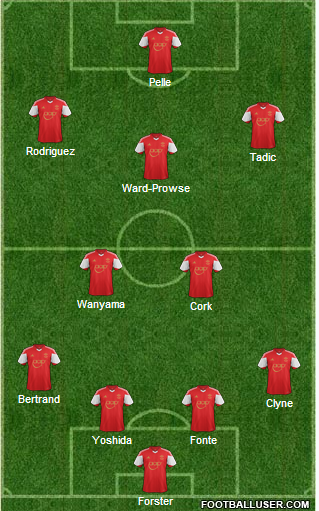
Predicted Line-Up:


Strengths:

Flexibility - With the incoming signing of Shane Long sure to be completed very soon, Southampton have 2 very different forwards, which allows them to change style and formation whenever they want. They can change to 2 up front, or they can move Long up top in the current 4-2-3-1 formation. This allows them to counter different types of defences - a high line will struggle with Long, whereas deep lines will struggle with Pellè.

Midfield - Despite the sales of Lallana and possibly Schneiderlin, Southampton actually have a very strong midfield. Cork is a fantastic player who is very underrated, Wanyama is a strong ball winning midfielder who contrasts well with Cork and Ward-Prowse is an extremely talented young playmaker with fantastic delivery from set-pieces. 

Creation - Dusan Tadic is a wonderfully talented player and will be a creative force for the Saints. With players like Ward-Prowse, Sean Davis and Jay Rodriguez all supplying the forwards, there should be no problem with scoring goals.

Weaknesses:

Central Defence - Jose Fonte is a good centre-back, however Yoshida is not really good enough for a mid-table Premier League team. Dejan Lovren was a key part of Saints' success last season and will be sorely missed. However, Saints do have two solid full-backs, but they may be weak in the heart of the defence.

Signings: 

Dusan Tadic - The Eredivisie is full of talent and Tadic was one of the top players in the Eredivisie last year. There have been plenty of success stories in recent years of players signed from the Dutch league - look at Suarez and Bony - so Southampton will be hoping Tadic can excel. He is a skilful playmaker who can beat a man and is a wonderful passer. 

Graziano Pellè - A strong centre-forward who is great in the air but decent with his feet too. He should be a more than capable replacement for Lambert. Another Eredivisie star, Pellè could be Saints' main goalscorer next season if he can reproduce his form.

Ryan Bertrand - Very good loan signing for Saints, Bertrand is a very capable defender who is decent going forward. Luke Shaw he is not, but Bertrand is a good left-back in his own right. I wouldn't be surprised to see him move in a permanent deal at the end of the season.

Saphir Taider - A dynamic midfielder who keeps hold of the ball well and works very hard to win it back. He's not a goalscoring midfielder, but he should be a reasonable replacement for Schneiderlin, given his reputation as a hardworking and physical player.

Shane Long - Not particularly prolific, but Long is a hardworking forward who creates space for the players around him with his pace and work rate. I think he'll be far more prolific in a Southampton shirt, but £12m is a lot of money for him and I'm not sure he's that good.

Fraser Forster - Top class 'keeper who will be a wonderful signing, in my opinion. He is commanding but still a brilliant shot stopper and should be a mainstay in the England squad in the next few years.

Who They Should Sign:

A Central Defender - Saints need another centre-back quickly, and a very good one. The problem for them is that top class centre-backs are in short supply at the moment, so they will have to pay a lot to find one.

A Winger - Saints need some cover for Rodriguez and Tadic, as one injury would leave them short out wide. I have a feeling that Long may be used out wide too and think he'll do a great job in the Rodriguez role, but another winger would not go amiss.

Final Thoughts:

People saying that Saints' squad is not good enough after being ravaged by 'bigger' teams are overreacting, in my opinion. Their squad is good enough for a mid-table finish and they've made a lot of money this summer. Whilst their squad is weaker than it was, it's not that big a difference.

Southampton will hope that Pellè and Tadic bed in quickly, as this will greatly improve their chances of a top 10 finish. They'll need Rodriguez to recapture his pre-injury form from last season, then they will be a dangerous outfit. 

I genuinely believe that there is no chance of Southampton going down and they should be in line for another mid-table finish.

Monday, 11 August 2014

Team Previews - QPR

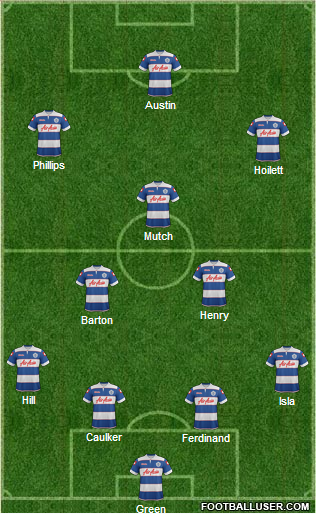
Predicted Line-Up:


Strengths:

Hard-working Midfield - Mutch, Henry and Barton are all combative and tenacious midfielders who can and will pressure the opposition and win the ball back. Having said that, they can play as well - Barton is a fantastic midfield dictator whilst Mutch has a lovely range of passing and an eye for goal. 

Pace out Wide - Hoilett, Phillips and Wright-Phillips are pacey wide men who will be dangerous on the counter-attack for any team. QPR have capable full backs who can overlap too, especially Isla, which will 
allow their wingers to cut inside as well.

Experience - Of all the promoted sides, QPR comfortably have the most internationals and Premier League appearances underneath their belt, which should really help them.

Weaknesses:

Age - Age is a double-edged sword; whilst experience is very useful, there comes a time when older players struggle for pace and fitness. Players such as Ferdinand, Dunne, Hill and Zamora are maybe past their prime, and may struggle with the rigours of the Premier League.

Possible Lack of Depth - Though QPR have a decent sized squad, the replacements for their starters really aren't to the same level and this could be their downfall.

Signings:

Steven Caulker - Could be a very good signing. Caulker is an athletic centre-half who is extremely good in the air and a goalscoring threat. However, Caulker isn't the most reliable defender and does make the odd mistake. If QPR get the best out of him, he'll be a top signing. 

Rio Ferdinand - No longer good enough, in my opinion. Obviously he was a superb defender in his day, but age and injuries have not been kind to Rio. This is a typical QPR signing that could backfire.

Mauricio Isla - Very good player, capable of playing at right-back or right wing. Isla had a good World Cup and is a fantastically talented player who will do well at QPR.

Jordon Mutch - A very talented young player, though injury prone. If Mutch can avoid injuries he will be a fantastic signing for the R's. He's dynamic, intelligent and can pick a pass, as well as being able to score the odd goal.

Who They Should Sign:

A young centre-half - A long term replacement to Richard Dunne should be on Redknapp's shopping list. Dunne is and was a very good player but how long that will last is arguable. Caulker was a good step towards that, but they need another defender would be a good idea.

A right-winger - Shaun Wright-Phillips is no longer good enough for the Premier League, so finding someone else to play there either as back up to, or preferably ahead of, Junior Hoilett, would be a good signing.

Final Thoughts: 

QPR should just about have enough about them to stay up. They have a combative midfield who will control games against teams around them in the league, a good goalscorer in Charlie Austin and some fast wingers to hit teams on the counter. Defensively, they may struggle a little bit, but they should be ok. 

The experience in the team should help QPR against the other teams in the lower half of the division. They won't aim to beat the top half teams in the league and any points against them will be a bonus. QPR should beat teams around them which should make them certainties to stay up.

QPR will just aim to stay up this season, and then establish themselves as a Premier League club next year. With the substantial investment that will surely come next year, that should be of no issue.